


Archery Rules & Safety

An Introduction to Archery Rules and Safety Guidelines
Archery rules and safety practices are essential for protecting participants and preserving equipment in an activity that involves high-speed projectiles and powerful tensioned gear. Clear rules establish order on the range, such as when to shoot, when to retrieve arrows, and how to handle equipment, which reduces the risk of accidental releases, misfires, or cross-lane shooting.
Archery safety guidelines, including proper range layout, use of protective gear, and equipment inspections, help prevent common injuries caused by string contact, arrow impacts, or equipment failure. Together, these rules also minimize damage to bows, arrows, and targets by discouraging unsafe behaviors like dry firing or shooting damaged arrows. By consistently following established rules and safety standards, archers create a controlled environment that allows the sport to be enjoyed responsibly and sustainably by everyone involved.

General Archery Rules
Following range commands and posted regulations is essential for maintaining a safe and orderly archery environment. Range commands guide archers on when it is safe to shoot, when to stop, and when to retrieve arrows, ensuring everyone acts in a coordinated manner. Posted regulations provide clear expectations for behavior, equipment use, and range layout.
Archers should only shoot in designated areas and approved directions to ensure arrows travel toward a safe backstop and away from people, property, or unintended targets. Shooting outside of designated lanes or in unsafe directions greatly increases the risk of injury, lost arrows, and equipment damage, and can endanger everyone on and around the range.
Respecting other archers and maintaining proper shooting order helps keep the range safe, fair, and organized. Waiting your turn, staying within your assigned lane, and being mindful of others’ space prevents distractions and reduces the risk of accidents during shooting and arrow retrieval.
By always following these instructions, archers help prevent accidents, protect others on the range, and ensure that shooting sessions run smoothly and safely for everyone involved.

Archery Safety for Beginners
Supervision for beginners helps ensure that new archers learn proper techniques and safety practices from the start. Guided instruction reduces the risk of injury, prevents equipment misuse, and builds confidence by teaching beginners how to follow range rules and handle their equipment correctly.
Beginners need to start with the proper draw weight and correctly sized equipment to ensure safety, comfort, and effective skill development. Using a bow that is too heavy or improperly sized can lead to poor form, muscle strain, or injury, and it often makes learning proper technique more difficult. Appropriately fitted equipment allows beginners to focus on accuracy, consistency, and safe handling while building strength gradually and developing good habits that will carry over as they progress.
Emphasizing a slow progression and skill development is highly encouraged to build a strong foundation in proper technique and safety. Moving too quickly into heavier draw weights or advanced skills can reinforce poor form, increase the risk of injury, and lead to frustration. Gradual progression allows beginners to develop muscle strength, consistency, and confidence while forming safe habits that support long-term improvement and enjoyment of archery.
Equipment Regulations
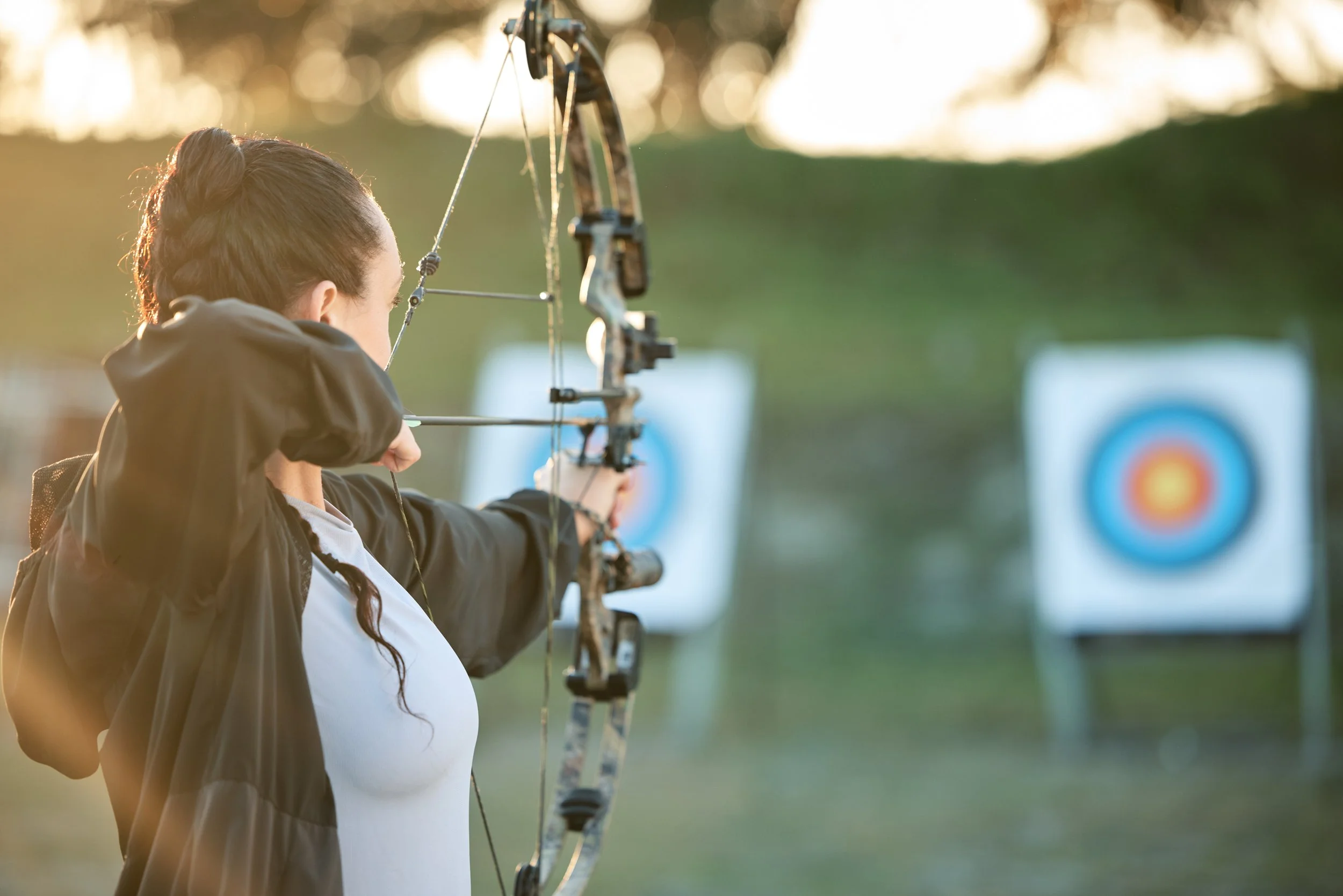
Equipment regulations for bows and arrows help ensure archery safety, fairness, and consistency across archery ranges and competitions. Different bow types, such as recurve, compound, and longbow, each have specific rules regarding their construction, draw weight, and permitted accessories. For example, compound bows may allow sights and release aids, while traditional longbows typically have stricter limits to preserve their historical style and simpler design.
Arrow regulations usually cover length, shaft material, and tip type to prevent equipment failure and reduce the risk of injury. Arrows must be matched appropriately to the bow’s draw weight and draw length, so they fly safely and consistently. By following established equipment regulations, archers help protect themselves and others while ensuring their gear performs reliably.
Arrow specifications are important for ensuring safe and reliable performance. Arrow length must match the archer’s draw length, so the arrow does not come off the rest when drawn, which could cause injury. Arrow weight should be appropriate for the bow’s draw weight, as arrows that are too light can damage the bow and affect accuracy. Tip type is also regulated, with field points commonly used for target practice and specific tips approved for competition or hunting, while unsafe or damaged tips are not permitted on ranges.
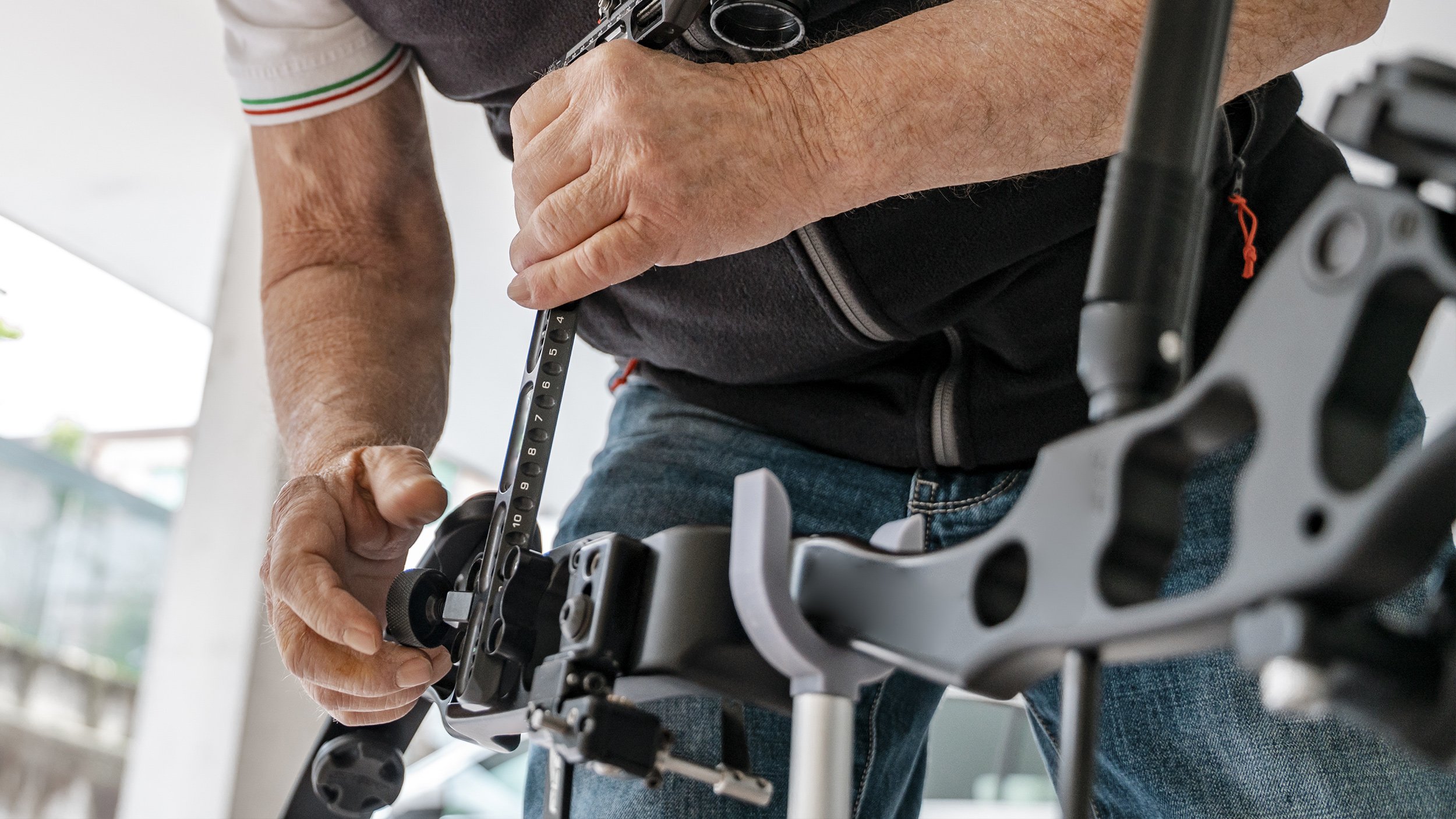
Other prohibited equipment in archery includes any gear that is damaged, worn, or modified in a way that creates a safety risk. Cracked arrows, frayed bowstrings, splintered limbs, or loose components can fail during shooting and may cause serious injury. Unsafe modifications, such as unauthorized alterations to bows, arrows, or release mechanisms, are also not allowed because they can compromise control, performance, and safety on the range.

Shooting Technique Rules
Proper stance and correct shooting lane use are essential for both safety and accuracy in archery. A stable stance helps the archer maintain balance, consistent form, and controlled shot execution, reducing the risk of misfires or loss of control. Staying within the assigned shooting lane ensures arrows are directed safely toward the target and prevents interference with neighboring archers, creating an organized and secure range environment.
Drawing and releasing an arrow should only happen when the range is clear and all archers are behind the shooting line. This ensures that no one is downrange or moving into unsafe positions when an arrow is released. Waiting for the proper command and confirming the range is clear helps prevent serious accidents and keeps everyone on the range safe.
Handling misfires, dropped arrows, and dry firing correctly is critical for maintaining safety on the archery range. If a misfire occurs, the archer should keep the bow pointed safely downrange and follow range procedures before attempting another shot. Dropped arrows should not be shot; instead, the archer should step off the shooting line and retrieve or replace the arrow only when it is safe to do so. Dry firing, which is releasing the string without an arrow, should be avoided entirely because it can severely damage the bow and potentially cause injury from equipment failure. Following proper procedures for these situations helps protect both archers and equipment.

Competitive vs. Recreational Rules
Casual shooting and tournament archery primarily differ in their level of structure and how strictly rules are enforced. Casual shooting is generally relaxed and focused on practice, recreation, and enjoyment, with an emphasis on basic safety and flexible equipment choices. Tournament archery, by contrast, follows detailed regulations set by governing organizations. These rules cover everything from equipment specifications and shooting sequence to timing, scoring procedures, dress codes, and athlete conduct, all of which are designed to ensure archery safety, fairness, and consistency among competitors.
In competitive settings, scoring and conduct expectations are clearly defined and closely monitored. Scoring is based on standardized target zones, with specific rules governing arrow placement, time limits, and score verification, often involving judges or official scorecards. Competitors are also expected to demonstrate honesty, sportsmanship, and respect toward officials and fellow archers. Unsafe behavior, rule violations, or unsporting conduct may result in penalties or disqualification, reinforcing the importance of discipline and professionalism in tournament archery.
Personal Archery Safety
Personal safety is a central focus in archery, and wearing appropriate protective gear plays a key role in reducing the risk of injury. Equipment such as armguards, finger tabs or shooting gloves, and chest guards helps protect the archer from string contact, abrasion, and clothing interference during the shot. This protective gear not only prevents injury but also improves comfort and consistency, allowing archers to maintain proper form and control.
Equally important is maintaining safe shooting behavior at all times. An archer should never point a drawn bow at people or animals, as a fully drawn bow stores significant energy and even an accidental release can cause serious harm. Keeping the bow aimed downrange ensures that any unintended release sends the arrow toward a safe target or backstop.
Attention must also be given to keeping fingers and bystanders clear of the bowstring path. When released, the string travels forward at high speed and force, making improper finger placement or nearby observers a serious safety hazard. By maintaining correct hand positioning and ensuring others stand clear of the shooting area, archers help create a safe environment where equipment functions as intended and injuries are avoided.

Common Archery Accidents and How to Prevent Them
Dry firing and bow damage are among the most common and preventable accidents in archery. Dry firing occurs when the bowstring is released without an arrow, causing the stored energy to remain in the bow rather than being safely transferred to the arrow. This can lead to cracked limbs, damaged cams, broken strings, or even complete bow failure, and in some cases may cause components to shatter and injure the archer or nearby bystanders. Preventing dry firing requires consistent attention and discipline, such as always confirming an arrow is properly nocked before drawing, following clear shooting routines, and educating beginners about the risks. Many ranges and instructors place strong emphasis on dry-fire prevention because it protects both archers and their equipment.
Arrow deflection and bounce-outs are another set of incidents that can create dangerous situations on the range. Arrow deflection happens when an arrow strikes a hard surface, another arrow, or an angled object and is redirected in an unpredictable direction. Bounce-outs occur when an arrow fails to penetrate the target and rebounds toward the shooting line, posing a risk to everyone nearby. These issues can be reduced by using targets designed to safely stop arrows, maintaining appropriate shooting distances, and replacing worn or damaged target faces. Archers should avoid aiming at hard surfaces such as target frames or stands and ensure their arrows are properly matched to the bow’s draw weight. Regular inspection of arrows and targets further helps prevent these incidents.
Accidental releases and cross-lane shooting are also serious safety concerns, often stemming from lapses in focus or poor lane discipline. Accidental releases may occur due to improper grip, distraction, or loss of balance while drawing, resulting in an unintended shot. Maintaining a stable stance, using correct technique, and only drawing the bow when fully prepared to shoot downrange can greatly reduce this risk. Cross-lane shooting happens when an arrow is released outside an archer’s assigned shooting lane, potentially endangering adjacent archers. This is commonly caused by misalignment, rushing shots, or stepping out of position. Staying within designated lanes, maintaining proper target alignment, and following range commands help prevent cross-lane shooting. Together, awareness, proper form, and respect for range boundaries significantly reduce the risk of these avoidable accidents.

Archery Safety is Everyone’s Responsibility
Archery rules and safety practices are essential to ensuring the sport can be enjoyed responsibly by everyone involved. Clear rules and consistent safety standards help reduce the risk of injury, prevent equipment damage, and create an organized, predictable range environment. By following established guidelines, archers protect themselves, fellow participants, and spectators while promoting good habits, sportsmanship, and long-term enjoyment. Rather than limiting participation, safety rules serve as practical tools that allow archery to be practiced with confidence and sustainability.
Maintaining this safe environment requires a commitment to continual learning and vigilance from every archer, regardless of experience level. As equipment, techniques, and range standards evolve, staying informed about best practices helps shooters maintain safe and effective habits. Remaining alert on the range, regularly reviewing safety rules, and being open to instruction or correction all contribute to a safer and more respectful atmosphere. Ongoing learning not only reduces risk but also supports improvement and enjoyment over time.
Ultimately, archery safety is a shared responsibility. Each participant’s awareness, discipline, and consideration for others plays a role in preventing accidents and fostering a positive range culture. When archers consistently follow rules, stay attentive, and look out for one another, the sport remains welcoming, respectful, and safe for all who take part.